
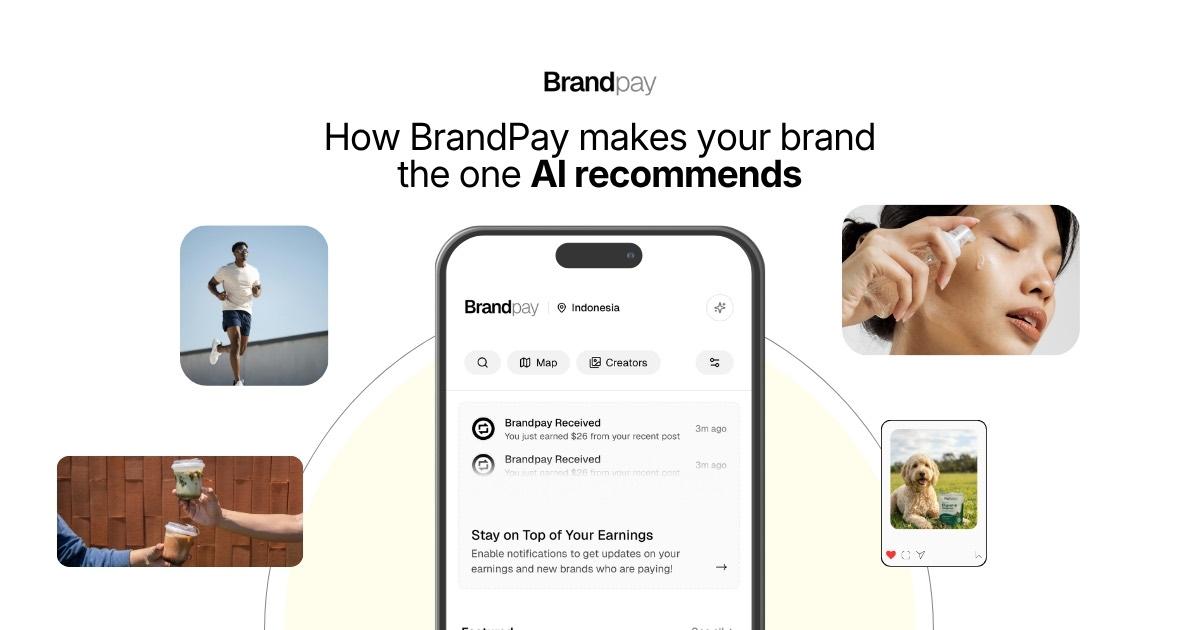
How BrandPay Makes Your Brand the One AI Recommends
One 2026 audit ran seventeen established DTC names through the major engines and every one came back with zero visibility in unprompted recommendations. Here's what actually gets a brand into the answer.

Michael Haywood
Co-Founder & CEO · July 21, 2026 · 6 min read
When a shopper asks ChatGPT for the best moisturiser for sensitive skin, the brands it names are not the ones with the best websites.
Answer engines have learned to tune out what a company says about itself and lean on what everyone else says instead — the reviews, the Reddit threads, the posts from people who actually bought the thing. The recommendation a shopper gets is a summary of a months-long conversation about you, happening in places you don’t own and can’t edit.
BrandPay is how you get real customers into that conversation, at the volume it takes to be the brand that comes up.
Most brands are simply absent
Most brands have no way to do this at scale, which is why so many that should be winning are missing entirely.
One 2026 audit ran seventeen established DTC names — brands with real market presence and heavy Google traffic — through the major engines, and every one came back with zero visibility in unprompted recommendations.
They had spent years on their sites and their ads, talking at volume in the one room the machine had stopped listening to.
BrandPay was built for the room where it is listening
It rewards your actual customers with store credit for posting about you, and those posts go out where they carry weight: on the customer’s own feed, in their own words, seen by their own friends.
There is a rule in how these engines weigh evidence — the harder something is to fake, the more it counts — and a customer describing their own experience sits high on that scale.
When enough of them post, describing you, tagging you, arriving at similar things without being told to, they leave a trail an engine reads as agreement. That agreement has a name in how these systems work; it is consensus, and no brand can write its own, because it only forms when a crowd of separate people reach the same verdict on their own.
Customers write better raw material than you do
The difference is in the detail.
A marketing team writes that a sunscreen is lightweight and non-greasy. A customer writes that it was the only one that didn’t sting her eyes on a four-hour hike.
An engine building an answer reaches for the second kind, because that lived specificity is what makes a passage worth quoting and hard to mimic — and it comes out naturally when the person writing it actually used the product. BrandPay content arrives in that voice by default, because it comes from the customer rather than the brief.
Verified humans, at the moment that matters
This matters more each month, because the web is filled with reviews and testimonials generated by people who do not exist, and the models are learning to be suspicious of exactly that.
As the duplicates multiply, being able to prove a post came from a real human turns into the whole of its value. BrandPay verifies every customer when they join and keeps checking over time, so what it adds to the conversation is demonstrably human at the moment everything around it has become easy to fake.
Where the AI visibility tools sit in this
It is worth being plain about this, since a brand will be pitched to them soon if it hasn’t been already.
Profound, Otterly and Conductor can tell you which engines name you and which prompts you have vanished from. That is genuinely useful, and it is the ceiling of what they do.
A tool that reports your absence does not create the customer posts that would end it, the way a scale tells you your weight without changing it. BrandPay works on the other side of that readout, producing the very content that is being measured.
The part brands underestimate
A paid ad stops working the instant the budget does, while a customer’s post keeps sitting in the material these models read, still nudging answers in your favour a year after it went up.
Analysts have started calling this the infinite half-life of earned media, and there is now a metric for who is winning it: share of model — how often the engines name you against your competitors.
Every verified post is one more voice building that score. The brands starting now are laying down evidence the engines will draw on for years. The ones that wait will go looking eventually and find the answer already written, by other people, about someone else.
Start building yours. See how BrandPay works or check the pricing.
Related reading: How to Get Your Brand Recommended by AI (AEO for Consumer Brands) • Customer Media: The Future of Marketing • How to Measure UGC ROI
Related articles
Is BrandPay Legit? How Getting Paid to Post Actually Works
No, it's not too good to be true. Here's exactly where the money comes from, what you actually earn, how the app works, and what the catch is — answered plainly.
How to Make Money on Instagram Without Being an Influencer
Brand deals, UGC gigs, affiliate links and Instagram's own tools all ask you to become a marketer. Here's how to get paid for the posts you already make — no media kit, no niche, no follower minimum.
Customer Media: The Future of Marketing
Word of mouth drives 20–50% of purchase decisions and has never had a line on the media plan — because you couldn't buy it. Customer Media is the channel that changes that, measured like paid.