
How to Get Your Brand Recommended by AI (AEO for Consumer Brands)
The answer ChatGPT gives when someone asks what to buy is becoming your most valuable shelf — and your own website barely figures in how it gets stocked. Here's what actually decides who gets named.

Michael Haywood
Co-Founder & CEO · July 7, 2026 · 8 min read
A year ago, shoppers who arrived from AI converted worse than everyone else. As of early 2026 they convert about 42% better, a near-complete reversal in a single year, and 52% of US consumers now say they shop with AI.
The answer ChatGPT gives when someone asks it what to buy is becoming your most valuable shelf, and your own website barely figures in how it gets stocked. That answer is assembled from what other people say about you, in conversations you never see.
Where consumer buying now starts
More of it now begins inside the chat than on a search page.
Someone types “best waterproof boots under $200 for wide feet,” and within seconds they have a shortlist and a checkout button, without passing a search result, an ad, or your website on the way.
AI-referred traffic to US retail sites grew roughly 393% year over year into 2026, and more than half of those sessions now open straight on a product page rather than a homepage — because the comparing has already happened by the time the shopper clicks, and the decision is largely made before you would ever have seen it.
How the engine picks what to recommend
A model does not read your homepage and conclude you are the best. It builds its picture from years of public content across review sites, forums, threads and posts, so it already has a sense of which brands come up repeatedly in a category before anyone types a query.
You can see what it weighs in the terms ChatGPT adds when it works through a shopping question, which include “best,” “reviews,” “comparison” and “vs” — each of them a search for what other people have said.
The mechanism underneath is consensus. When the same three skincare brands surface across eight different countries, it happens because a weight of independent sources keeps naming them and the model treats that repetition as a signal of truth.
Ranking well on Google does not carry over either, since only about 17% of the sources cited in its AI answers overlap with the top organic results.
Who gets cited
When an AI recommends a brand, the recommendation lands on the brand, while the citation underneath usually points at a third-party page — a review, a Reddit thread, or an article by someone else.
Analysts call this gap the mention-source divide. Conductor’s benchmarks put 84% of AI citations in earned media rather than brand-owned or paid pages, and as Vercel’s chief technology officer has said, Reddit is now the place to influence the hive mind.
A brand can build a well-structured, thoroughly optimised site and still never be the source a model quotes when it decides who to recommend.
What the AEO tools do
Yotpo Discover, Profound, Otterly and Conductor track your AI visibility, showing which engines name you, for which prompts, and where you have gone missing.
That is useful for knowing where you stand, but it measures the problem rather than solving it, because knowing you are absent from ChatGPT’s skincare answer does nothing to create the reviews and posts that would put you back into it.
Closing the gap takes production — someone has to generate real third-party content about you, at volume, in the language shoppers use.
The role of customer content
Answer engines pull out specific, lived detail — the sort a real customer writes when they mention a cream that cleared their skin in two weeks or a battery that lasted a full day. It reads nothing like the phrasing a brand uses about itself, and it is the detail most brands never think to capture.
A genuine customer post carries that register, comes from a verified person, and ties back to a real purchase. And it compounds, because each new post adds to the consensus the model is already reading.
That grows more valuable as the web fills with machine-made copy, since a verified real customer is one of the few signals synthetic content cannot convincingly fake. So much of the buying journey now happens inside the chat, out of reach of your analytics, that the mention formed before the purchase becomes the main thing you can still influence.
How BrandPay builds it
Every point above describes something a brand cannot mimic on its own site, and each one is a thing BrandPay produces by design.
- Third-party content, at volume. Rewarding customers with store credit for posting turns real buyers into a steady supply of the content engines actually cite, in the specific language of someone who used the product rather than the language of a brand describing itself.
- Verified humans. Every poster is verified as a real person, so the content carries the one signal synthetic UGC cannot, at exactly the moment engines are learning to discount anything they suspect is generated.
- Consensus, not one mention. Because the reward scales with participation, the volume builds on its own — and that is what consensus is: not one polished mention, but many independent people saying the same thing often enough that a model reads it as true.
The AEO tools measure that consensus. Customer Media is how you build it.
Start building your share of the answer. See how BrandPay works or read how it makes your brand the one AI recommends.
Related reading: Your Campaign Has a Shelf Life • Why User-Generated Content Matters More Now Than It Ever Has • When Content Becomes Currency
Related articles
Is BrandPay Legit? How Getting Paid to Post Actually Works
No, it's not too good to be true. Here's exactly where the money comes from, what you actually earn, how the app works, and what the catch is — answered plainly.
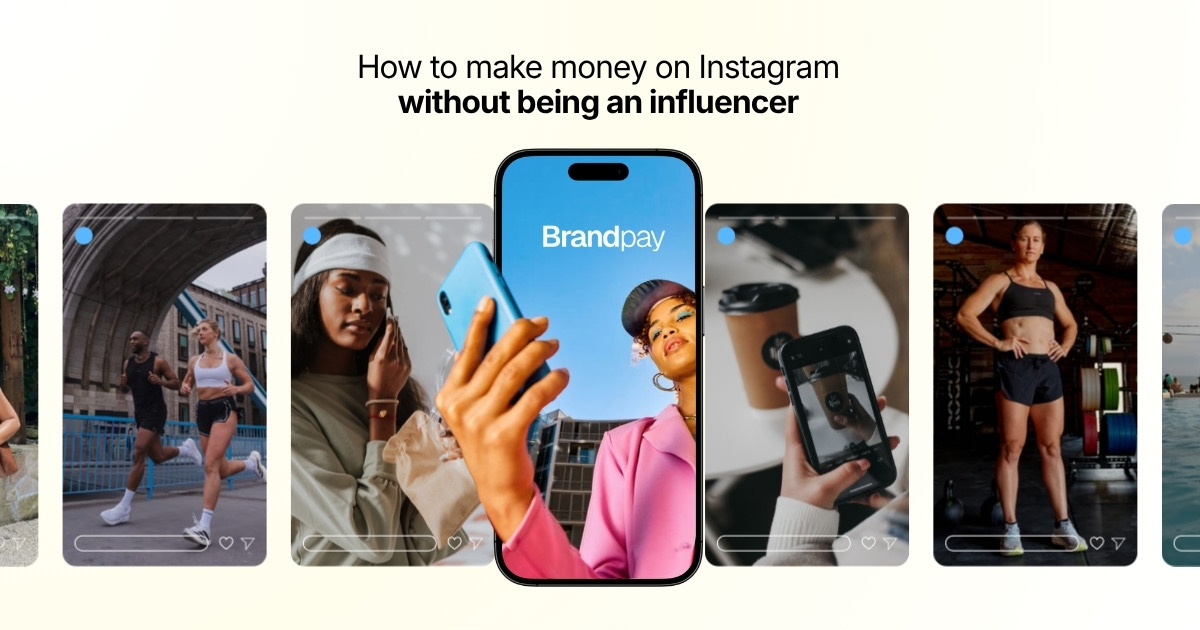
How to Make Money on Instagram Without Being an Influencer
Brand deals, UGC gigs, affiliate links and Instagram's own tools all ask you to become a marketer. Here's how to get paid for the posts you already make — no media kit, no niche, no follower minimum.
Customer Media: The Future of Marketing
Word of mouth drives 20–50% of purchase decisions and has never had a line on the media plan — because you couldn't buy it. Customer Media is the channel that changes that, measured like paid.