
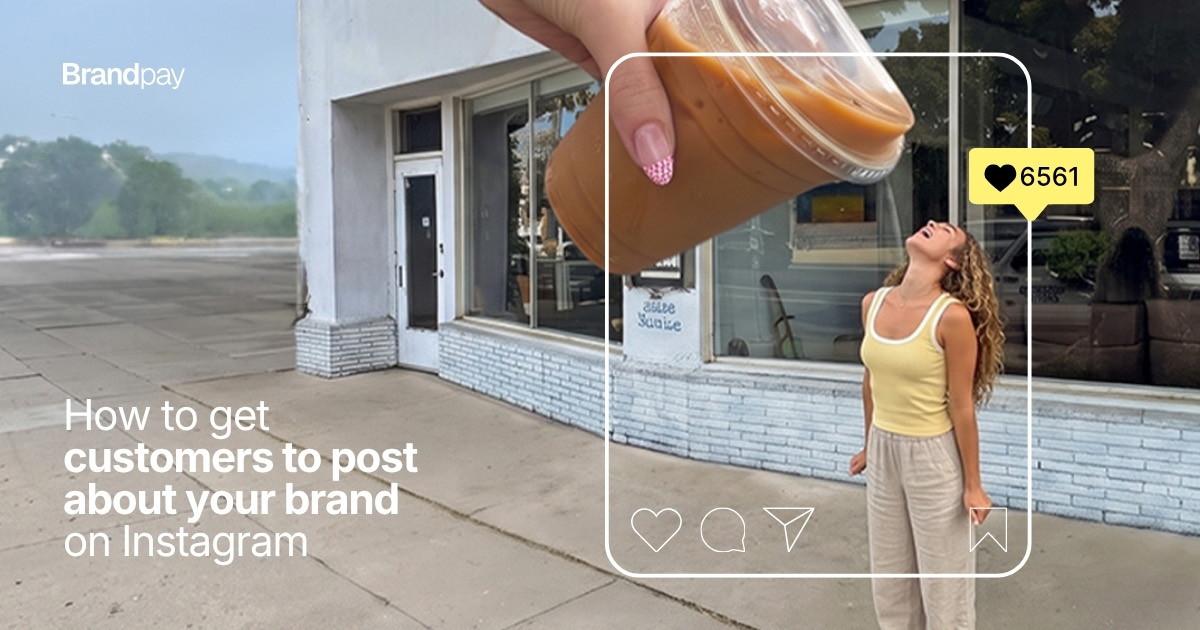
How to Get Customers to Post About Your Brand on Instagram
Your customers are already posting. The question is whether any of it comes back to you. Here's how to turn a one-off tag into a repeatable habit — rewarded with store credit that returns as revenue.

Michael Haywood
Co-Founder & CEO · June 16, 2026 · 5 min read
The market already moved. Through 2025, customer content jumped from 15% to 35% of all campaigns run on Collabstr, more than doubling in a year, as brands shifted budget away from polished creator posts toward content from the people who actually buy from them.
Your customers are posting. The question is whether any of it comes back to you.
Customer content already converts better
Adweek found that customer content converts 29% better than content without it, and that advantage lands hardest on Instagram, where the behaviour already lives.
Hootsuite reports that half of all users have gone to a website to buy something after seeing a product in a Story, and that nearly 72% of brand content on Instagram now sits in Stories in the first place.
The audience is watching, the intent to buy is there, and most of the content that could feed it belongs to your customers — sitting in their feeds, in front of people you are not paying to reach, earning you nothing you can measure.
Why it stops at one post
A customer tags you in a Story and the loop stays open. Nothing acknowledges it, nothing rewards it, so it happens once and does not repeat.
That is the real problem to solve, and it is a smaller one than it looks, because you are not manufacturing a new habit. You are giving an existing one a reason to keep going.
Reward the behaviour with store credit that returns
This is where Customer Media comes in: content made by your real customers, rewarded with store credit for posting about you, and spent back with you.
Around 77% of consumers say they would create content for a brand if a reward were attached, so the supply is already in your customer list.
Store credit does more than a discount code or a flat fee, because the money does not leave your business. It returns as the customer’s next purchase. One reward:
- reaches a new audience through the post
- gives you content you can reuse on your ads and product pages
- brings the customer back to spend
That is three jobs from one line of spend — and it’s why earned credit behaves differently from a discount.
The brands that proved it
Glossier is the clearest proof that customer content is a growth engine and not a nice-to-have. Roughly 70% of its online sales and traffic come from peer referrals, and close to 80% of its customers arrive through a friend rather than a paid ad. Its founder, Emily Weiss, has described the whole philosophy in five words: “every single person is an influencer.”
Gymshark built one of the UK’s largest consumer brands the same way in its early years, with almost no paid media, by giving its most active customers recognition and reach and letting their content do the distribution.
What both did by hand — spotting advocates and rewarding them with codes and status — BrandPay runs as a system, with the difference that the reward is store credit spent back with the brand, so the advocacy gets paid and the spend returns as revenue.
Your customers are already posting. Make them your advocates.
Set a reward, let customers post the way they already do, and watch what used to be a one-off tag become a channel you can plan around.
Ready to turn Instagram mentions into repeat revenue? See how BrandPay works or compare it against the rest of the stack.
Related reading: Turn Customers Into Brand Advocates • Why User-Generated Content Matters More Now Than It Ever Has • How to Measure UGC ROI
Related articles
Is BrandPay Legit? How Getting Paid to Post Actually Works
No, it's not too good to be true. Here's exactly where the money comes from, what you actually earn, how the app works, and what the catch is — answered plainly.
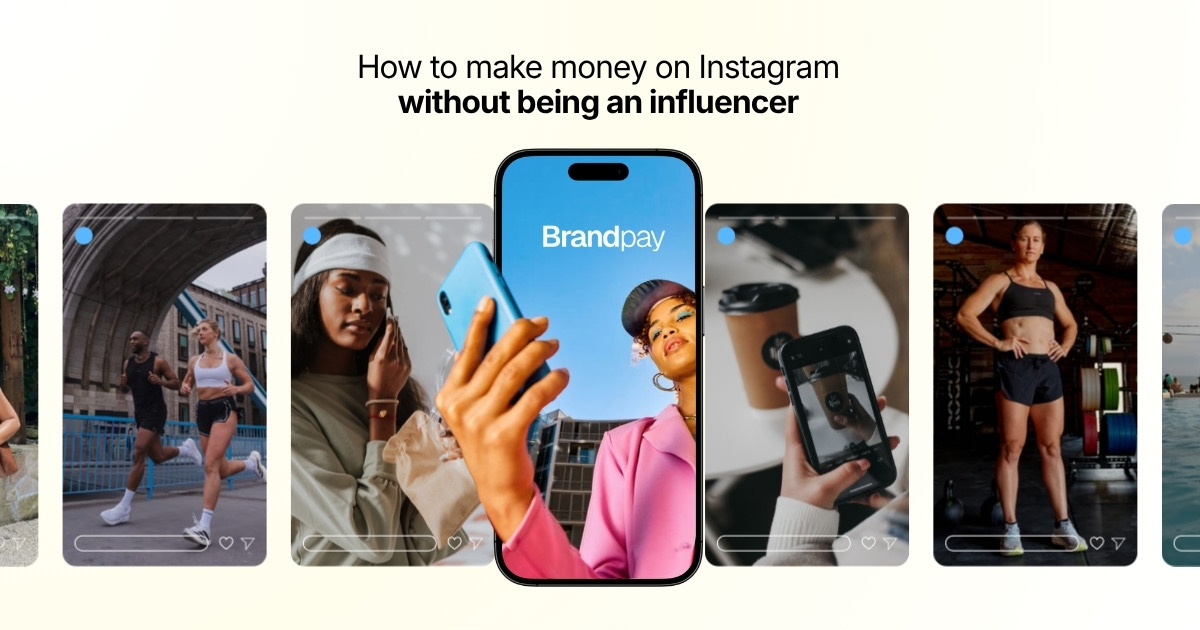
How to Make Money on Instagram Without Being an Influencer
Brand deals, UGC gigs, affiliate links and Instagram's own tools all ask you to become a marketer. Here's how to get paid for the posts you already make — no media kit, no niche, no follower minimum.
Customer Media: The Future of Marketing
Word of mouth drives 20–50% of purchase decisions and has never had a line on the media plan — because you couldn't buy it. Customer Media is the channel that changes that, measured like paid.